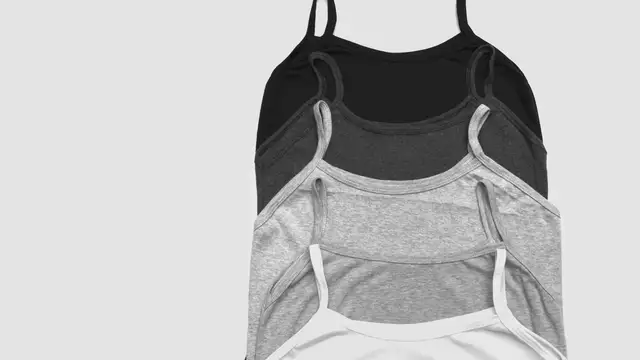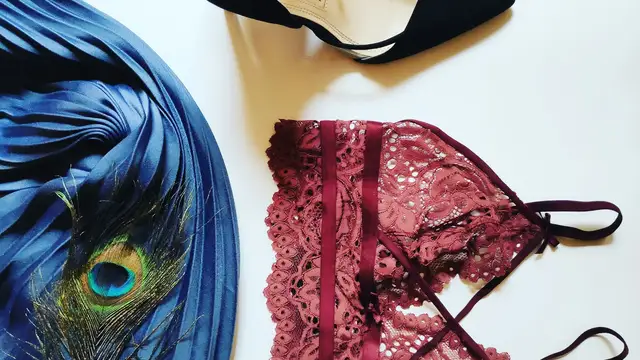
A bralette is a soft, unstructured bra, usually without wires or padding, made for comfort and light support. A structured bra uses a firm band, shaped cups and often underwires to lift, separate and shape. The main differences are structure, support and sizing.
Bralette vs bra at a glance
| Bralette | Structured bra | |
|---|---|---|
| Wires | Usually none | Often underwired |
| Padding | Usually unlined | Unlined, lined or padded |
| Band | Narrow or soft elastic | Firm, often with hooks |
| Support | Light | Light to firm |
| Sizing | Usually S–XL | Band and cup (34C, 36DD…) |
| Shape | Natural | Lifted, separated, shaped |
| Best for | Lounging, layering, smaller busts | Everyday support, all sizes |
Bravissimo describes bralettes as “non-wired for lighter support with a super comfortable fit”, and Marks & Spencer calls them “soft, wire-free support that feels barely there”.
Why bralettes feel so comfortable
- No underwire pressing on your ribs or under your arms.
- Soft, stretchy fabrics such as lace, cotton and modal.
- Fewer components: often no hooks or rigid seams.
- Lighter hold, which feels freer but lifts less.
The trade-off is support. Without a firm band or wires, a bralette can’t lift and separate the way a structured bra does.
Who are bralettes good for?
- Smaller busts, who often find a bralette gives all the support they need. See our guide to bras for small chests.
- Lounging and working from home, when comfort beats shape.
- Layering under open shirts or tops, if you choose a decorative style.
- Sleeping, if you like some light hold at night.
When a structured bra is better
- Fuller busts, where lift and separation make a real difference to comfort.
- Fitted clothes where you want a smooth, shaped line, such as a T-shirt bra gives.
- Long days on your feet, when a firm band spreads the weight better.
- Exercise, which needs a proper sports bra, not a bralette.
How to choose a more supportive bralette
If you love the feel of a bralette but need more hold:
- Look for band-and-cup sizing. Some brands make bralettes in sizes like 34D rather than S–XL.
- Choose a deep band, at least an inch or two, rather than a thin elastic strip.
- Pick a longline bralette, which extends below the bust and stays put better.
- Check for side panels or seams in the cups.
- Consider a wireless bra, which sits between a bralette and an underwired bra.
Other wire-free options include the jelly bra, with gel strips for shape, and the shelf bra built into tank tops.
How should a bralette fit?
- Band: snug and level without rolling or riding up.
- Cups: cover your breasts without gaps or spillage at the sides.
- Straps: stay on your shoulders.
- Comfort: nothing digs, even after hours of wear.
Since S/M/L charts vary between brands, measure your underbust and bust in inches and compare them with each brand’s chart. Our guide to measuring your bra size explains how.
Shopping for bralettes
Affiliate links-
Lace bralettes
Light and pretty, often designed to show under open tops.
Search Amazon for lace bralettes (opens in a new tab, affiliate link) -
Longline bralettes
A deeper band that stays put and gives a bit more support.
Search Amazon for longline bralettes (opens in a new tab, affiliate link) -
Bralettes in band and cup sizes
More precise fit for fuller busts.
Search Amazon for bralettes in band and cup sizes (opens in a new tab, affiliate link) -
Cotton bralettes
Soft and breathable for lounging and sleep.
Search Amazon for cotton bralettes (opens in a new tab, affiliate link)
Results are Amazon’s, not our picks. Check the size range, the return policy and the features above before you buy.