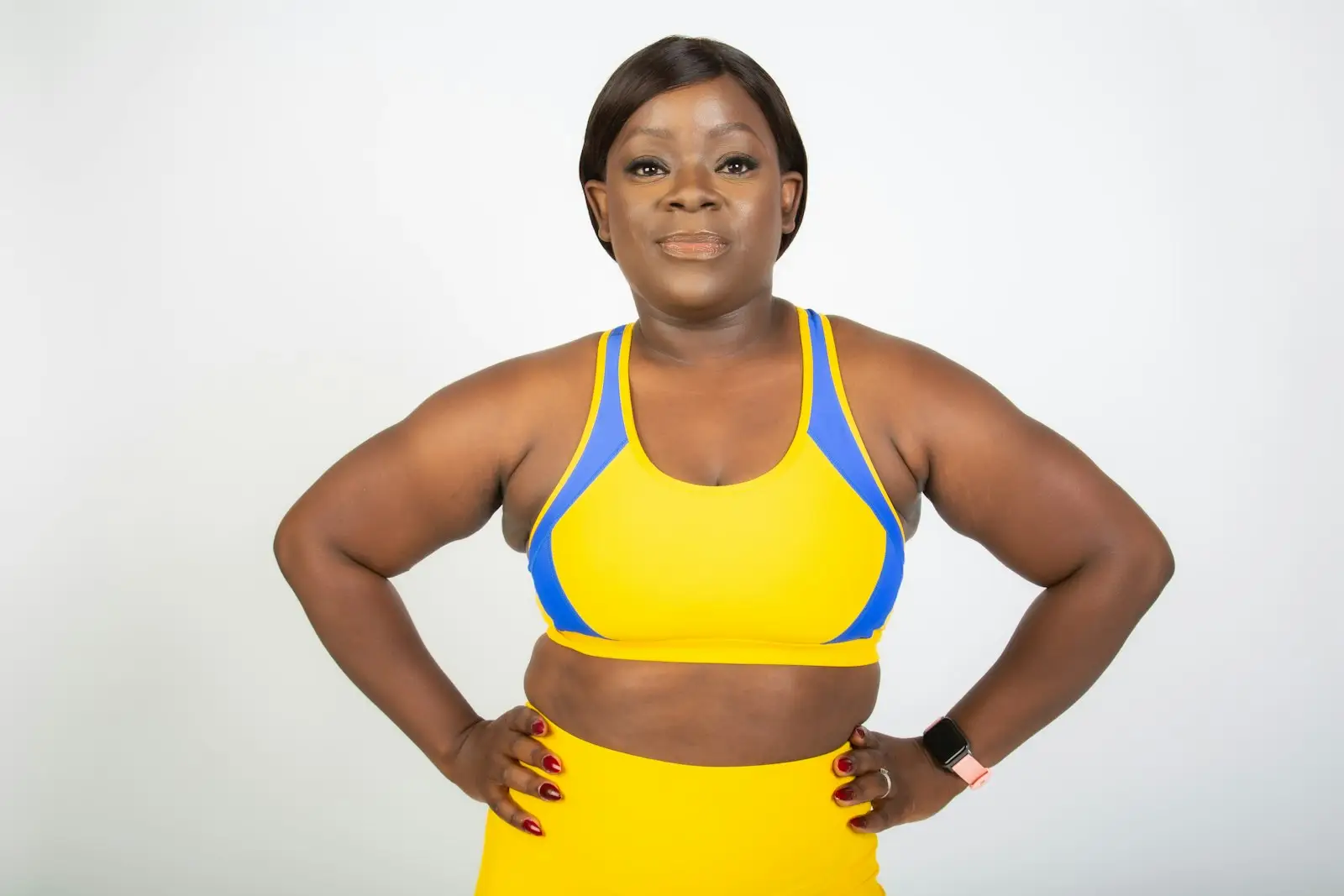
The best sports bras for large breasts usually have separate encapsulated cups, a firm adjustable band, adjustable straps and a high neckline. The University of Portsmouth’s breast health research group found that five features (encapsulation, padded cups, an adjustable underband, nylon content and a high neckline) together explain over a third of how well a sports bra performs.
Why support matters more at larger cup sizes
Portsmouth’s research shows why breast support matters during exercise:
- When women run in inadequate breast support, stride length shortens by about 4 cm, which they estimate could add up to an extra mile over a marathon.
- In a survey of 1,659 women, 51.5% reported breast pain, and those women tended to have larger breasts and be less active.
So a good sports bra isn’t only about comfort. It can make it easier to keep moving.
Encapsulation vs compression
| Type | How it works | Best for |
|---|---|---|
| Compression | Presses breasts against the chest as one unit | Smaller busts, low impact |
| Encapsulation | Separate cups hold each breast | Larger busts, medium to high impact |
| Combination | Separate cups plus compression | Larger busts, high impact |
Bravissimo describes sports bras as working “by holding your boobs close to your chest for maximum hold and minimum movement”. For D cups and up, encapsulation or combination styles usually do that best.
The five features research links to better support
Portsmouth’s study on sports bra performance identified five characteristics:
- Encapsulation: separate cups.
- Padded cups: molded or lined cups that hold shape.
- An adjustable underband: hooks so you can get the band firm.
- Nylon fibre content: a firm, supportive fabric.
- A high neckline: more coverage at the top.
Use these as a checklist when you shop.
How to size a sports bra for a large bust
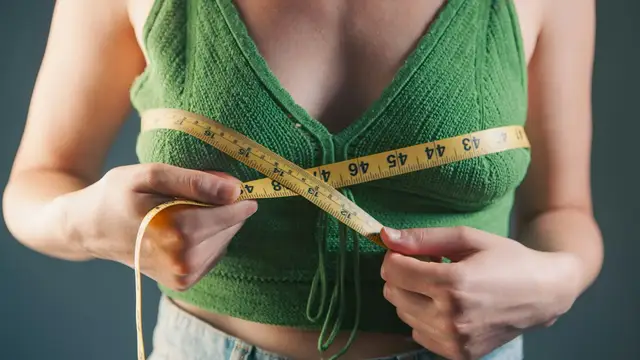
- Choose band-and-cup sizing (34G, 36F) over S/M/L where you can. It fits larger busts much more precisely.
- Start with your everyday size, then check the fit while moving.
- The band should be firm enough to stay level when you jump, but not so tight you can’t breathe deeply.
- Remember US vs UK letters. Many fuller-bust sports bras use UK sizing, where a US G is a UK F. Our G cup and H cup guides explain the conversions.
How to test a sports bra
- Jog or jump on the spot for 30 seconds.
- Raise your arms overhead and twist.
- Check the band hasn’t ridden up.
- Check the cups: no spilling at the top, sides or under the arms.
- Check for chafing at the straps, band and under the arms.
If you bounce noticeably, try a firmer band (one size down, one cup up), or switch to an encapsulation style. Our general guide to bras for large breasts covers everyday support too.
Other features worth having
- Wide, padded straps, often adjustable or convertible to racerback.
- Moisture-wicking fabric for long sessions.
- Front or back adjustability, so you can tighten the band as it stretches.
- Flat seams to avoid chafing.
Sports bras for larger busts
Affiliate links-
Encapsulation sports bras, D+ cups
Separate cups and a hook-and-eye band.
Search Amazon for encapsulation sports bras, d+ cups (opens in a new tab, affiliate link) -
High-impact underwire sports bras
Wired cups for maximum hold during running.
Search Amazon for high-impact underwire sports bras (opens in a new tab, affiliate link) -
Sports bras in band and cup sizes
More precise than S/M/L for larger busts.
Search Amazon for sports bras in band and cup sizes (opens in a new tab, affiliate link) -
Adjustable racerback sports bras
Straps that convert to racerback and stay put.
Search Amazon for adjustable racerback sports bras (opens in a new tab, affiliate link)
Results are Amazon’s, not our picks. Check the size range, the return policy and the features above before you buy.